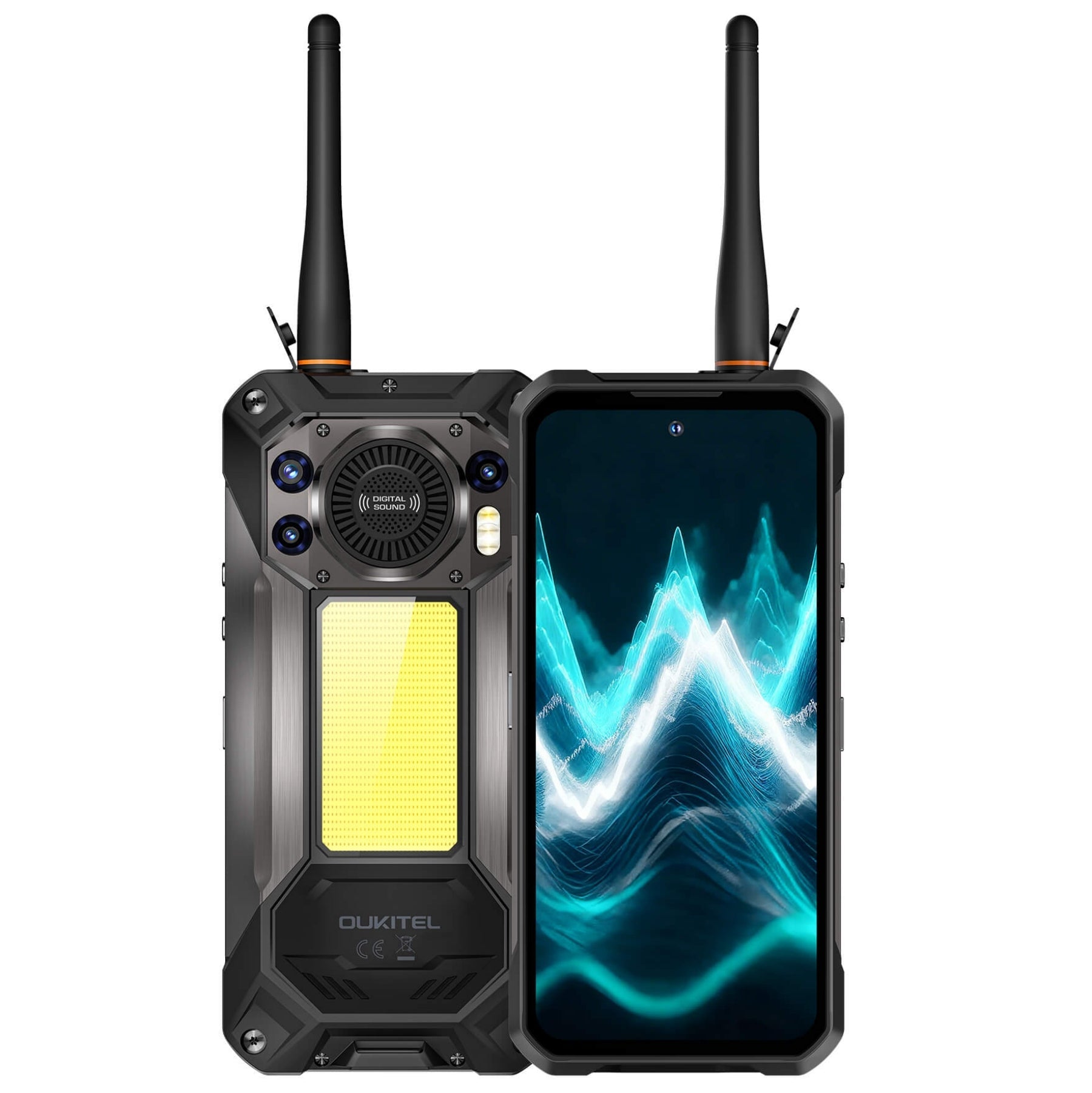
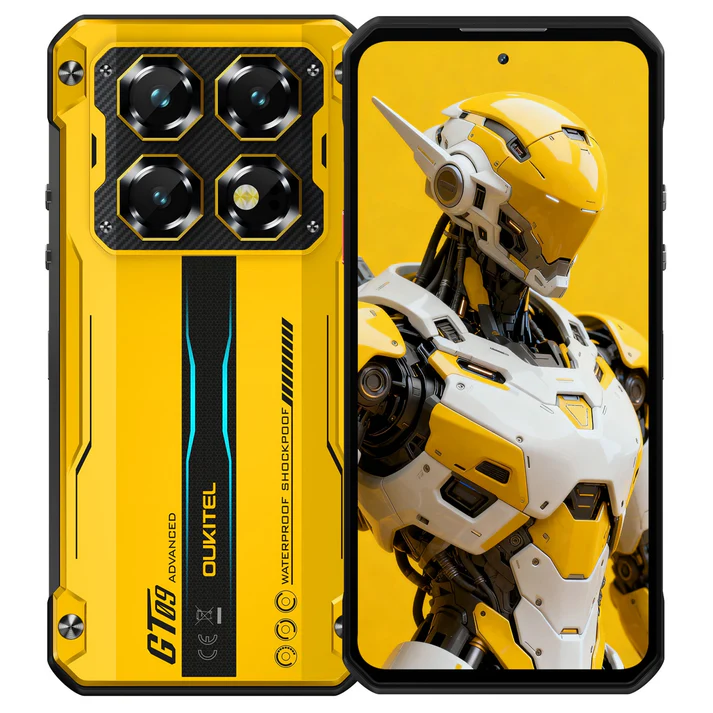
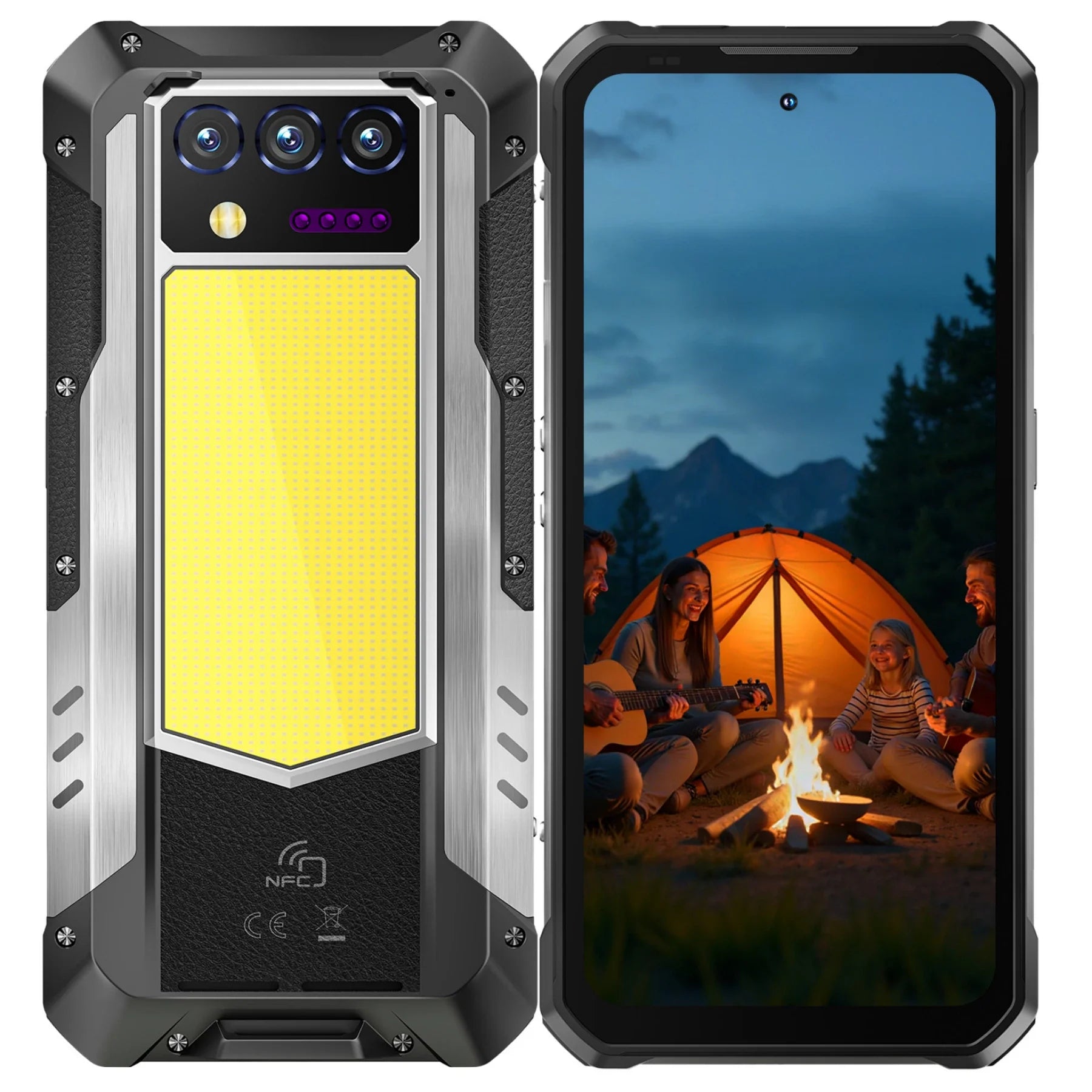
Looking for verizon rugged phones that actually work well on Verizon’s network? This guide breaks down the bands you need, how 5G Ultra Wideband coverage works (C-Band and mmWave), what IP68/IP69K and MIL-STD-810H really mean, and how to choose a 5G rugged phone with long battery life for worksites and outdoor use. We’ll also include a practical compatibility checklist and buyer picks—without stuffing brand names.
Verizon basics: the bands that matter (LTE & 5G)
Before you fall in love with any outdoor phone, confirm the radios line up with Verizon’s network.
Core LTE bands
- Band 13 (700 MHz) – Verizon’s historic “anchor” LTE band; excellent coverage/penetration and still key for voice/LTE fallback. Community and support materials repeatedly call out B13 as essential for reliable service.
- Bands 2/4/5/66 – Capacity layers (PCS/AWS/CLR + AWS-3). Most Verizon devices and BYOD phones use a mix of these, with B66 important in many markets.
5G bands (what “UW” really means)
- n77 (C-Band, mid-band) – Verizon’s broad 5G Ultra Wideband coverage layer delivering a balance of speed and range; Verizon publicly describes C-Band’s role and expansion.
- n260/n261 (mmWave, high-band) – Very fast, very short-range 5G used in dense venues/city cores; “UW” can also mean these mmWave blocks. Support content and device pages reference these specifically.
Translation: For the smoothest Verizon experience in 2025, look for Band 13 + Bands 2/4/5/66 on LTE and n77 for mid-band 5G. If you work in stadiums/city centers and care about the fastest possible speeds, n260/n261 add mmWave. Verizon’s own device pages (e.g., Kyocera DuraSport 5G UW) list these band combos in the specs.
BYOD note: Verizon approves only certain unlocked models for voice/data. Community guidance stresses that approved hardware/software are required—not every “supports the bands” phone gets whitelisted. Always IMEI-check.
Coverage 101: where Verizon 5G helps rugged users

- C-Band (n77) provides the “sweet spot”: better building penetration and wider reach than mmWave but much faster than low-band 5G/LTE. Verizon’s own explainer outlines why C-Band boosts both performance and footprint for everyday users.
- mmWave (n260/n261) is fantastic on site if you’re near nodes (stadiums, dense downtowns). But it’s line-of-sight and short-range—amazing when available, irrelevant when you’re miles from town. Verizon explains its band mix and spectrum position powering 5G UW nationwide.
Reality check: For crews moving between rural highways, warehouses, and suburbs, n77 + strong LTE anchor (B13) matters more than mmWave bragging rights. Device support pages (e.g., Kyocera DuraSport 5G UW) highlight n77 alongside LTE bands 13/66 etc., which is exactly what you want to see.
What “rugged” actually means (IP & MIL-STD quick decode)
- IP68: dust-tight and immersion protection to a specified depth/time—good for rain, puddles, and short dunks.
- IP69K: high-pressure, high-temperature jets (ISO 20653) used for close-range spray/clean-downs. It addresses sprays, not deep immersion; many devices list both IP68/IP69K to cover both hazards. Verizon’s rugged lineup and vendor spec sheets frequently emphasize IP68 for immersion; IP69K is more common on slab phones than flips.
- MIL-STD-810H: U.S. DoD test methods for shock, drop, vibration, temperature, humidity, and more; not a single pass/fail stamp. For “drop proof” claims, look for Method 516.8 (Transit Drop) details in rugged vendor references like Kyocera’s DuraXV Extreme+.
Also remember: no phone is “permanently waterproof.” Seals and gaskets can wear or be compromised by impacts; even major carriers flag software/band enablement and evolving support (e.g., C-Band updates) on device pages.
Verizon-friendly rugged categories (and who they suit)

A) Rugged flips (voice-first)
- Best for: PTT, voice/text, glove use, multi-day standby.
- Network reality: Many are LTE-only; verify Band 13 and VoLTE support, plus carrier approval. The Kyocera DuraXV Extreme+ is a common reference: IP68/MIL-STD-810H, HazLoc options, loud speakers—classic rugged flip behavior on Verizon.
- Trade-offs: Small screens, modest cameras/apps. If you need maps/photos daily, pick a slab.
B) Rugged slabs (smartphone-first)
- Best for: Full Android apps, mapping, documentation, hot-swap into enterprise EMM/MDM.
- Network reality: Look for LTE B13/2/4/5/66 + 5G n77, and optionally n260/n261 for mmWave. Verizon’s “Rugged Phones and Tablets” and device pages (e.g., DuraSport 5G UW) show exactly these combos.
- Trade-offs: Heavier than consumer phones (especially with long battery), but much tougher.
Verizon-ready rugged examples (to calibrate your expectations)
These are reference points to understand how band listings are presented on successful Verizon devices—use them as a template when you read any spec sheet:
-
Kyocera DuraSport 5G UW (Verizon)
Device page lists 5G n2/n5/n66 plus 5G UW n260/n261 & n77, and LTE B13, B66, B2, B4, B5 (and others). It’s IP68 and MIL-STD-810H—a textbook Verizon rugged slab. -
Kyocera DuraXV Extreme+ (Verizon)
A rugged flip with IP68 and MIL-STD-810H; designed for harsh environments, with HazLoc and drop/immersion details. Great for voice-first fleets. -
Sonim XP10 (for Verizon)
Ultra-rugged slab marketed as Verizon-specific; Sonim positions it as a 5G device for push-to-talk and field use. If you see n77/B13/B66 in specs and Verizon sales channels, you’re in compatible territory.
Why these matter: Their pages illustrate the exact band language you should demand from any candidate device you hope to run on Verizon.
Can I use an unlocked “global” rugged phone on Verizon?

- Right bands (especially LTE Band 13 and 5G n77), and
- Carrier approval/whitelisting for voice+data features. Verizon community guidance notes that only select BYOD devices with approved hardware/software are allowed, even if the bands match on paper. Always run an IMEI check with Verizon before buying.
If you’re considering an OUKITEL rugged phone, verify the exact band support on the model’s spec page and confirm with Verizon’s BYOD checker. Then think about IP/MIL-STD needs, battery capacity, and carry method. Our Rugged Phones collection is a good starting point for 5G rugged phone options with big batteries and protective designs.
Picking the right Verizon rugged phone: a practical flow
1) Start with your environment (protection)
-
Water immersion/puddles/storms: Look for IP68 and a stated depth/time.
-
Pressure-wash cleanup: Prefer devices that list IP69K (less common on Verizon-sold phones; check vendor specs).
-
Shock & drops: Seek MIL-STD-810H language and, ideally, drop-height claims (e.g., onto concrete). Verizon’s rugged catalog calls out IP68/MIL-STD-810H on work-focused devices for a reason.
2) Network & band checklist (Verizon)
-
LTE: B13 (must), plus B2/B4/B5/B66.
-
5G: n77 (C-Band) for “UW” in most places; optionally n260/n261 for mmWave in dense areas. See how Kyocera lists n77 + n260/n261 on its Verizon device page.
3) Battery & charging
-
If you spend days away from outlets, choose a long battery rugged slab (10,000–20,000 mAh+ classes exist), or carry a removable-battery flip with spares. Heavy batteries add weight, so pair with a holster case for comfort.
4) Ergonomics & carry
-
Programmable keys for PTT/SOS, loud speakers for noisy environments, glove/wet touch screens, and belt clip/holster or tether-ready cases for ladder work.
5) Software & updates
-
Confirm Android/security update cadence and any enterprise features (MDM, Zero-Touch, PTT clients).
-
For 5G, check if a one-time software update is needed to enable C-Band (n77)—Verizon has documented mid-band enablement on certain models historically.
6) Warranty & support
-
Business buyers: look for extended warranty/SLA, and make sure accessories (chargers, holsters, car mounts) are easy to source.
Best-fit picks by use case (Verizon-centric)
-
Voice-first crews (simple + tough):
Rugged flip with IP68/MIL-STD-810H (e.g., DuraXV Extreme+ on Verizon). Loud audio, glove-friendly keys, long standby. Ideal for PTT and basic tasks. -
App-heavy field teams (maps, forms, photos):
Rugged slab supporting LTE B13/B66 and 5G n77; mmWave (n260/n261) optional. Kyocera’s DuraSport 5G UW shows the right recipe (IP68 + MIL-STD-810H + n77 + LTE anchors). -
Public safety / industrial deployments:
Ultra-rugged slab with PTT ecosystem and accessories; Sonim XP10 for Verizon is a common reference for enterprise rollouts. -
Battery-centric outdoor users:
Look for long battery slabs on our Rugged Phones collection and verify Verizon band support/approval; pair with a holster for weight distribution.
Frequently Asked Questions
Does Verizon have any rugged phones?
Yes. Verizon maintains a rugged category (phones/tablets) featuring devices like Kyocera Dura-series and enterprise-focused models, clearly labeled with IP68/MIL-STD-810H and Verizon 5G/LTE support.
Which rugged phone is best?
“Best” depends on your job: voice-first → rugged flip; app-heavy/ camera/maps → rugged slab with n77 + B13; enterprise PTT → Sonim-class device. Check band support and IMEI with Verizon, then choose the protection level (IP68/IP69K) and long battery you need.
What’s the most durable phone in the world?
Durability is more than one label. Look for IP68/IP69K for water/dust and MIL-STD-810H (with drop test details) for shock/vibration. Verizon-sold rugged devices (e.g., DuraSport 5G UW, DuraXV Extreme+) showcase practical, field-tested toughness.
What is a rugged phone?
A smartphone built for harsh environments with sealed enclosures, reinforced frames, raised bezels, and lab-tested resistance (IP/MIL-STD-810H). Many modern rugged models are 5G rugged phones with big batteries and PTT keys—perfect for jobsites and backcountry.
Verizon buying checklist (copy/paste)
- Bands: LTE B13 + B2/B4/B5/B66; 5G n77 (C-Band) required for modern UW; n260/n261 nice-to-have for mmWave zones. (See how DuraSport 5G UW lists these.)
- Approval: Run an IMEI check with Verizon; BYOD must be approved hardware/software, not just “same bands.”
- Protection: IP68 minimum; IP69K if you face pressure-wash cleanup; MIL-STD-810H with drop details. Verizon’s rugged pages highlight these for a reason.
- Battery & carry: If you choose a long-battery slab, plan a belt clip/holster to manage weight.
- PTT & audio: Loud speakers (100 dB-class), programmable keys for PTT/SOS.
- Updates: Confirm Android/security cadence and any needed C-Band enablement updates.
- Accessories: Case + screen protection; vehicle charger/cradle; spare cables for field kits.
Light brand touch: how our store fits
If you’re exploring OUKITEL rugged phone options, start by shortlisting models whose band sheets include B13/B66 on LTE and n77 for 5G. Then pick protection (IP68 vs IP69K), long battery needs, and your carry method. Our Rugged Phones collection groups high-capacity, shockproof, drop proof slabs designed for real work—just be sure to verify IMEI compatibility with Verizon before you buy.
Bottom line
verizon rugged phones shine when they combine the right bands (LTE B13 + B2/B4/B5/B66, 5G n77; optionally n260/n261) with real-world durability (IP68/IP69K, MIL-STD-810H). If you’re voice-first and glove-heavy, a rugged flip on Verizon is perfect. If you live in maps, forms, and photos, a 5G rugged phone slab with long battery is the smarter call. Always band-check, IMEI-check, and pick the protection level your job actually requires.